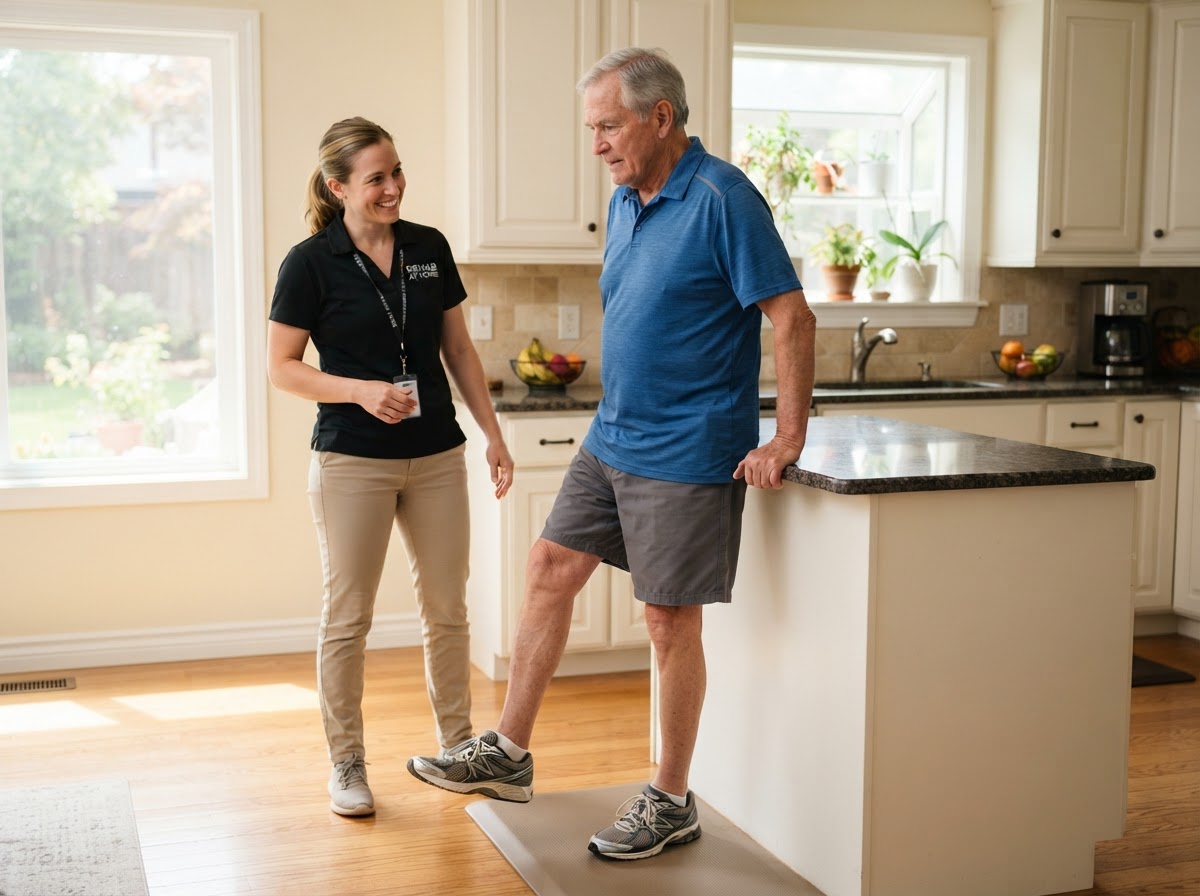
Some people with peripheral neuropathy have very little pain. Instead, they notice that their feet feel padded, the ground feels less distinct, or walking becomes less automatic. They may touch furniture at night, hesitate on curbs, or feel less stable on grass. These are not minor details. They can reflect changes in the sensory information used for balance.
Key takeaway
Balance is a team effort between sensation, vision, the inner ear, strength, and reaction speed. Neuropathy can weaken one member of that team.
Why the feet matter to balance
The soles of the feet and the joints of the ankles continuously report pressure, movement, and body position to the nervous system. The brain blends that information with vision and the vestibular system of the inner ear. Together, these systems help keep the body upright and guide each step.
When sensation from the feet becomes less precise, the brain may rely more heavily on vision. That is why a person may feel relatively steady in a bright hallway but less secure in a dark bedroom. Uneven or soft surfaces also make the task harder because the information coming from the ground is less predictable.
Why strength still matters
Sensation helps identify that balance is being lost. Muscles create the correction. Ankle, knee, and hip strength contribute to stepping reactions, toe clearance, and the ability to recover from a stumble. A person may therefore need both sensory and movement-based strategies rather than a single “balance exercise.”
What the rehabilitation evidence suggests
A 2024 systematic review evaluated physical rehabilitation for people with diabetic peripheral neuropathy who were already at risk of falling. Sixteen studies met the review criteria. In six studies, participants improved enough on balance measures to move from moderate-to-high fall-risk categories to low or no measured fall risk. Effective programs varied and included balance exercise, gait training, endurance work, proprioceptive training, aerobic exercise, tai chi with mental imagery, and yoga. Other studies showed no improvement or mixed results.
The practical message is balanced: rehabilitation can help, but there is no single universal exercise, and improvement is not guaranteed. Programs should match the person’s current ability and progress only when the task is safe and appropriately challenging.
What a useful balance assessment can include
A clinician may examine:
- Standing balance under different sensory conditions
- Safe reaching and weight shifting
- Walking speed and foot clearance
- Turning, curbs, stairs, and uneven surfaces
- Lower-extremity strength and sit-to-stand ability
- Foot sensation and footwear
- Vision, dizziness, medication effects, and other contributors
Self-testing without support can create unnecessary fall risk. If you already feel unstable, use a stable surface and seek professional guidance before attempting narrow-stance, eyes-closed, foam, or single-leg exercises.
Everyday safety while you build capacity
Improving the environment is not giving up; it is creating a safer platform for recovery. Use adequate night lighting, remove loose rugs and trip hazards, keep frequently used pathways clear, wear secure footwear, and use a prescribed assistive device when recommended. Check feet regularly if sensation is reduced.
How PNRS addresses balance
PNRS treats balance as a measurable function, not a vague feeling. The program establishes a safe starting point, builds appropriate sensory, balance, and strength habits, and repeats selected measures over time. The daily routine is adjusted to the person’s findings, medical history, and response.
When to seek prompt care
Sudden imbalance, new one-sided weakness, facial drooping, trouble speaking, new severe headache, chest pain, fainting, or rapidly worsening walking ability can signal a medical emergency. Call emergency services when appropriate. New bowel or bladder changes or numbness in the saddle area also warrant urgent medical evaluation.
Questions to Bring to Your Provider
- Which part of my balance system appears most affected?
- Am I safe to exercise independently?
- Do I need an assistive device or footwear change?
- Which home hazards should I address first?
- How will we measure whether my balance is improving?
References
- Alissa N, Shipper AG, Zilliox L, Westlake KP. A Systematic Review of the Effect of Physical Rehabilitation on Balance in People with Diabetic Peripheral Neuropathy Who Are at Risk of Falling. Clinical Interventions in Aging. 2024;19:1325-1342. doi:10.2147/CIA.S459492.
- Hammi C, Yeung B. Neuropathy. StatPearls Publishing.