When your feet burn or tingle, relief naturally becomes the first priority. A medication, topical treatment, or electrical device that reduces pain can make sleep, walking, and daily life easier. That benefit is real. The important distinction is that pain relief and improved nerve function are not automatically the same thing.
Pain is an experience produced by the nervous system. It can change because pain signals are being modulated—even when numbness, balance, strength, or nerve conduction remain unchanged. The reverse can also happen: function may improve before symptoms disappear completely.
Key takeaway
Ask two separate questions: “Do I feel better?” and “Am I functioning better?” A good plan tracks both.
What symptom-focused treatment can do
Traditional transcutaneous electrical nerve stimulation, commonly called TENS, is generally used to modulate pain. Many people describe it as turning down the volume of an alarm. That may help a person tolerate activity or rest more comfortably, but the response should not be interpreted as proof that every aspect of peripheral nerve health has changed.
Medication can also play an important role, especially when pain disrupts sleep or participation in daily life. Decisions about medication belong with the prescribing professional. Symptom management and rehabilitation are not enemies; they answer different questions and can be coordinated.
What researchers measured beyond pain
A 2025 randomized open-label study compared a pulsed direct-current neuromuscular electrical stimulation protocol with TENS as part of physical therapy for 150 adults with diabetic peripheral neuropathy. Participants received 12 sessions over six weeks. Researchers measured clinical neuropathy scores, two-point discrimination, vibration sense, pain, nerve-conduction velocity, and nerve amplitude.
The direct-current group improved significantly in several—but not all—measures, including clinical neuropathy scores, dominant-foot two-point discrimination, vibration sense, pain, and some nerve-conduction measures. The TENS group did not show significant differences in the reported outcomes. These findings are encouraging, but they should be interpreted in context: the study was open-label, examined a specific device and protocol, involved diabetic peripheral neuropathy, and combined stimulation with physical therapy. It does not prove that every direct-current device repairs nerves or that the results apply to every cause of neuropathy.
A more useful progress dashboard
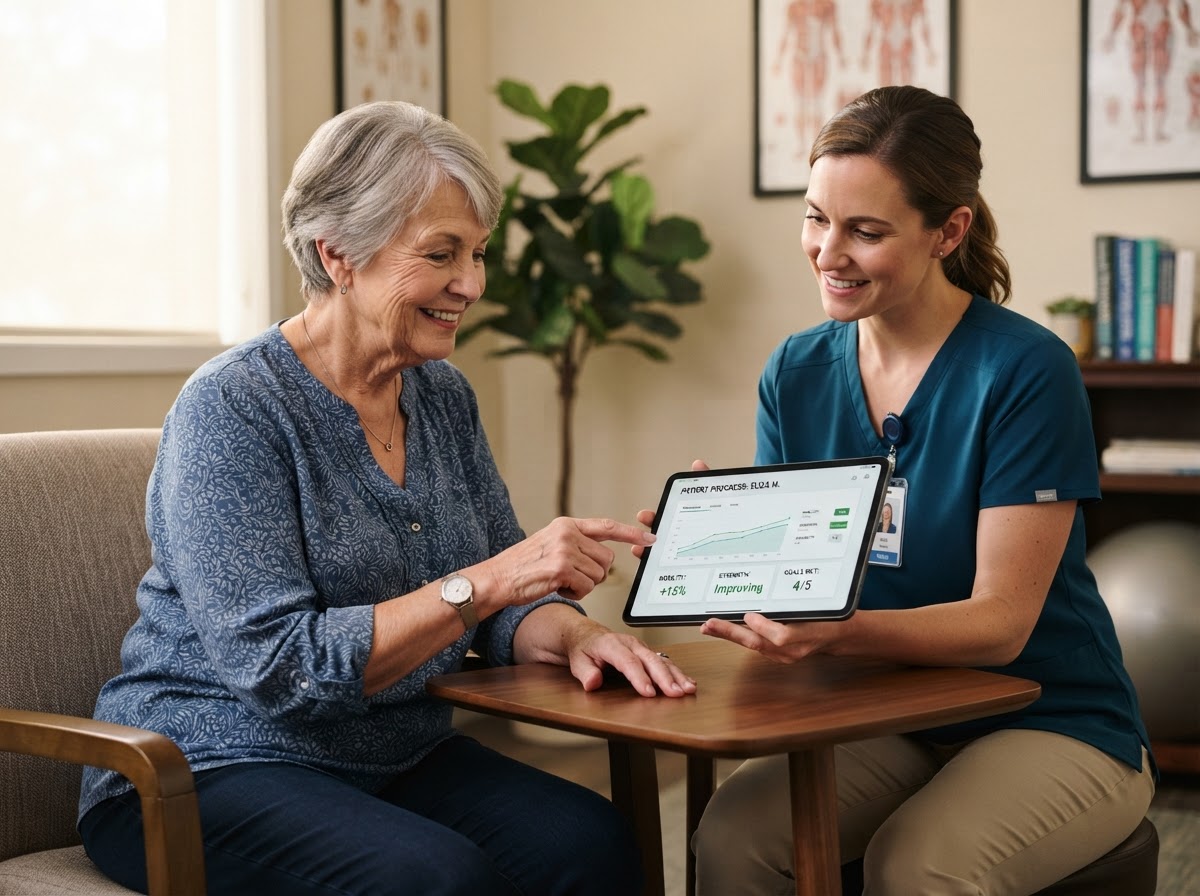
Instead of relying on pain alone, consider a dashboard with multiple domains:
- Symptoms: burning, tingling, numbness, sensitivity, and sleep disruption
- Sensation: light touch, vibration, or other clinically appropriate sensory measures
- Balance: safe standing, reaching, and walking measures
- Strength and mobility: sit-to-stand, ankle control, gait, and endurance
- Daily function: stairs, community walking, driving, and confidence
The value is in repeated, comparable measurement. A good day is encouraging; a trend is informative.
How PNRS uses this distinction
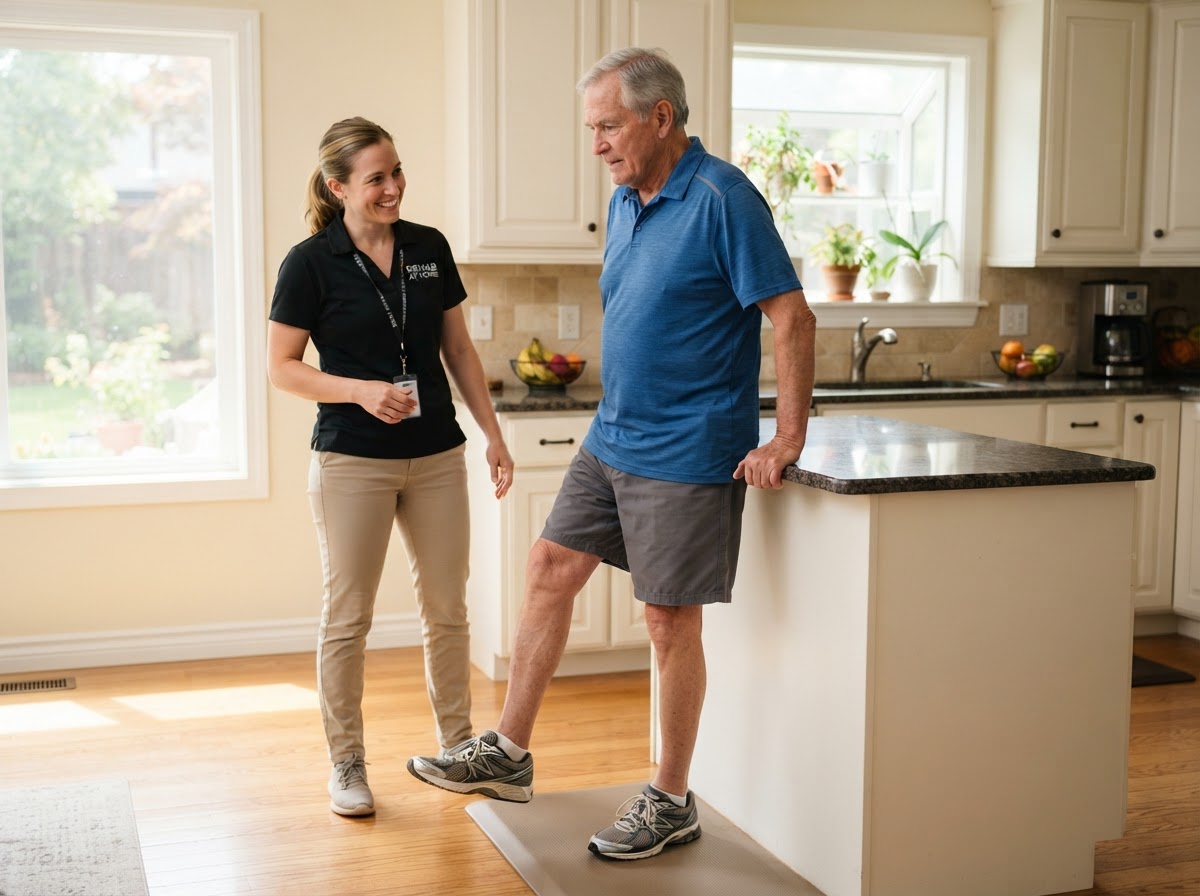
PNRS is designed around a broader question than “How much does it hurt today?” The system combines clinician-guided education, individualized rehabilitation, daily home action, and repeated tracking. Depending on clinical findings and the chosen support track, a plan may emphasize sensory practice, circulation-supporting activity, balance, strength, recovery habits, or other appropriate interventions.
The goal is not to dismiss pain. It is to prevent pain from becoming the only outcome that counts.
Questions to Bring to Your Provider
- Is this treatment intended for symptom relief, functional improvement, or both?
- Which outcomes should change if the treatment is working?
- Does the evidence apply to my type and cause of neuropathy?
- How long should we try the plan before reassessing it?
- What will we change if pain improves but balance or numbness does not?
References
- Kostopoulos D, Rizopoulos K, McGilvrey J, et al. An Open-Label Comparative Study of the Impact of Two Types of Electrical Stimulation on Physical Therapy Treatment of Diabetic Peripheral Neuropathy. Journal of Diabetes Research. 2025;2025:9970124. doi:10.1155/jdr/9970124.
- Hammi C, Yeung B. Neuropathy. StatPearls Publishing.